
I've been to Dublin a handful of times. PayPal had a presence here, and I passed through on a few occasions over the years. Enough to know the airport, enough to have a restaurant or two I'd been to before. Enough, I suppose, to feel like I had a sense of the place.
I thought I knew Ireland.
This week I realized that even a little familiarity is enough to stop you from really looking.
I'm here on a Qualtrics trip, and for the first time I did something I've never done on a work trip: I brought one of my kids along. My 16-year-old daughter Noa joined me for the journey, and what that changed was something I didn't fully anticipate. We explored together, without an agenda, through her eyes as much as mine. We went to Glendalough, a glacial valley in the Wicklow Mountains that has been there for roughly 400 million years. We walked through Powerscourt Gardens. We saw places that were an hour from where I had sat in meetings dozens of times, that I had somehow never once made the time to visit.
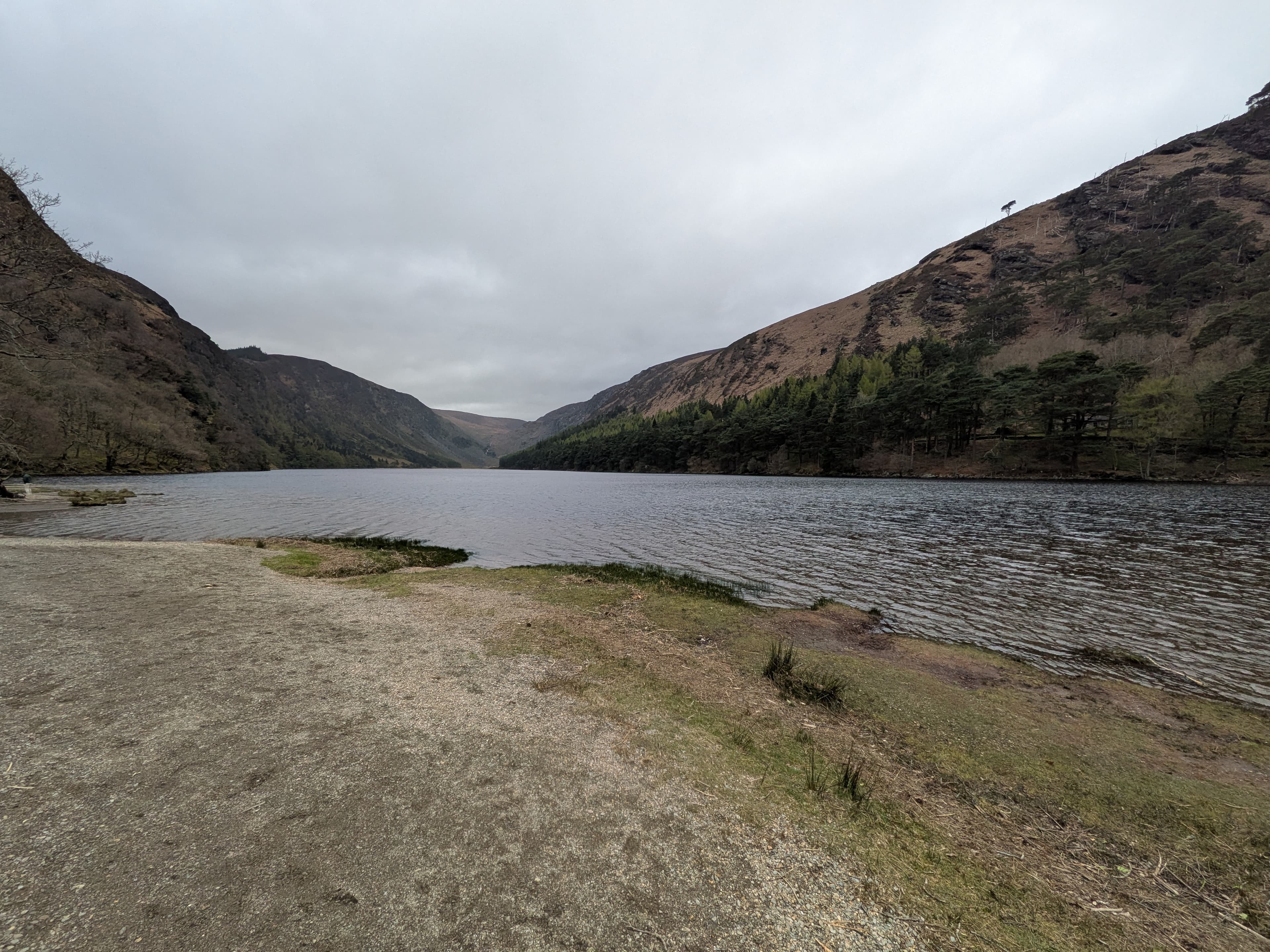
Standing at the edge of the lake at Glendalough, mountains rising on both sides, water completely still, I had a thought that has stayed with me since.
How often do we do this in our work?
The Comfort of Knowing
Familiarity is seductive. Once you know how something works, or think you know, the pull toward genuine curiosity weakens. You stop asking why the process exists and start executing it. You stop questioning whether the assumption is still valid and start building on top of it. You stop noticing what's right in front of you because you've seen it so many times it has become invisible.
In security, this is not just a personal liability. It's a structural one.
The threat landscape changes faster than most organizations can track. Attackers don't respect the mental models we built five years ago. The controls we designed for a previous environment are being tested against a different one. And yet experienced security professionals, the people best positioned to see these gaps, are often the least likely to notice them. Not because they don't care. Because they've stopped looking with fresh eyes.
Experience creates pattern recognition, which is valuable. It also creates blind spots, which are dangerous. The longer you've been in a system, the more you see what you expect to see rather than what's actually there.
A Habit I've Kept for Years
There's a question I ask every time someone joins my team. I've been doing this long enough now that it's become reflex. The question is simple: what do you see here that we don't? Give me your honest read on our blind spots.
Not a formal onboarding exercise. Not a survey. A real conversation, usually in the first few weeks, before the new perspective has been normalized out of them.
The answers are almost always worth hearing. And they get harder to come by the longer someone has been in the room.
New people notice things that experienced people have stopped seeing. The process that everyone knows is broken but nobody talks about. The assumption that everyone makes but nobody has tested. The friction that the team has accepted as normal that customers or colleagues find genuinely painful. The tool that everyone uses a workaround for because the official solution stopped working well somewhere along the way and the path of least resistance was to adapt rather than fix.
These things don't disappear just because the team has stopped noticing them. They sit there, compounding quietly, until something forces them into view. An incident. An audit. A new leader who asks an obvious question and gets an uncomfortable answer.
The value of fresh eyes isn't that new people are smarter. It's that they haven't yet learned what not to question.
Curiosity Is a Discipline, Not a Trait
I want to push back on something I hear fairly often, which is the idea that curiosity is a personality characteristic. Something you either have or you don't. A fixed quality that some leaders bring to the table and others don't.
I don't think that's right.
Curiosity is a discipline. It requires active maintenance, particularly in environments that reward confidence and expertise, which describes most security organizations. The professional pressure to appear knowledgeable is real, and it works against the kind of genuine questioning that produces real insight. Asking basic questions feels risky when you're expected to have advanced answers. Admitting uncertainty feels exposing when your value is supposed to be that you know things other people don't.
But the cost of not asking is higher than the cost of asking and looking uncertain for a moment.
The questions that have produced the most useful insights in my career have usually been the ones that felt almost too basic to ask. Why do we do it this way? Has anyone checked whether this actually works? What would a new person find surprising about how we operate? What are we optimizing for, and is that still the right thing?
These are not sophisticated questions. They are deliberately simple ones. And the willingness to ask them, in front of people who expect you to already know the answers, is a leadership act that requires practice.
Stepping Away Is Part of the Work
The other thing this weekend reminded me of is something I know intellectually but have to keep relearning in practice: stepping away is not a reward for finishing something. It is part of doing the work well.
The security industry has a complicated relationship with this. We operate in environments where the stakes are real, the threats don't pause, and the instinct to stay on is always available and usually feels justified. One more hour. One more check. One more loop through the alerts before stepping out. The work will always provide a reason to stay engaged if you let it.
But the leaders I've seen sustain high performance over long careers are not the ones who never disengaged. They're the ones who learned to disengage deliberately, and came back with something that extended availability couldn't produce: perspective.
Bringing Noa on this trip was a deliberate choice. Work trips have always been just work for me. This time I wanted something different, and what I got was a weekend of genuine presence, the kind that is hard to manufacture when your phone is nearby and the inbox is open. Standing at the edge of Glendalough with my daughter, neither of us looking at a screen, I was reminded that some of the most important things we're protecting aren't inside our systems.
What Fresh Eyes Find
This week I'm visiting Qualtrics teams in Dublin and Krakow, meeting colleagues I've worked with for months or longer, some of them face to face for the very first time.
I'm not coming with a briefing deck. I'm coming with that same question I ask every new joiner.
What are you seeing that we don't? What are the blind spots that are harder to see from the other side of the world?
The geographic distance that makes distributed teams harder to manage also creates something useful: different vantage points. Teams in different geographies see things that aren't visible from headquarters. Their perspectives are shaped by their context, their experience of the organization, the things they notice precisely because they haven't been normalized out of noticing them.
That's not a problem to be managed. That's information to be sought.
The lake at Glendalough was completely still when we arrived. The mountains on either side had been there long before any of the problems I was carrying in my head, and they will be there long after. That kind of perspective doesn't solve anything. But it creates space to ask better questions.
Which, in the end, is where most of the good work starts.